ARCHIVING TO CARE (FOR OURSELVES AND FOR EACH OTHER). SHARED OUTCOMES OF THE WORKSHOP 'O FORNO DA AMARA.' Activities Programme
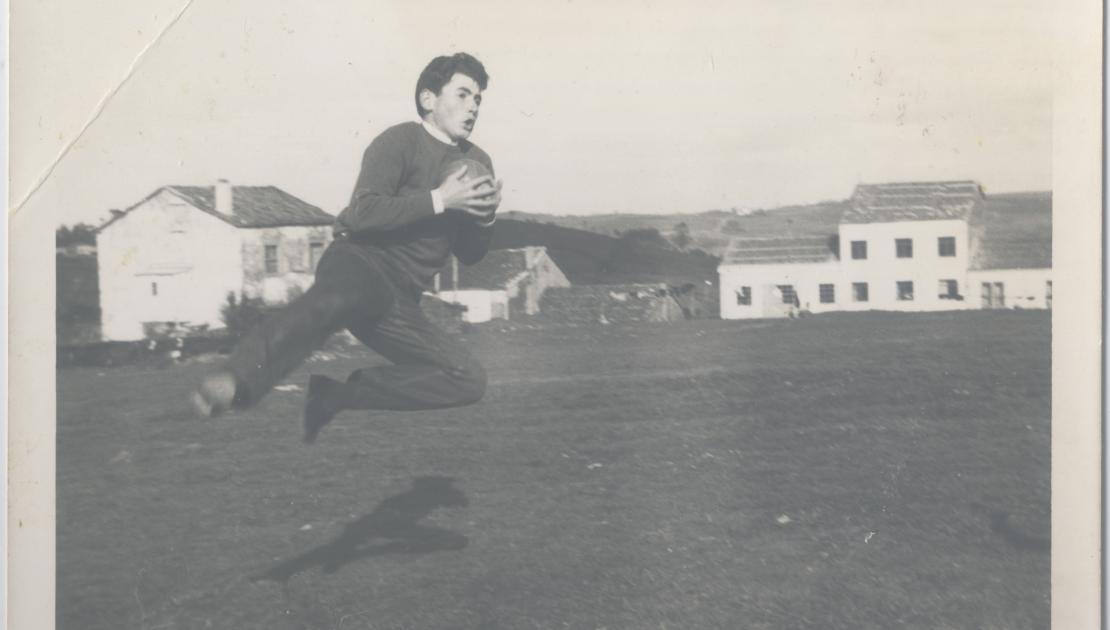
As part of the community action programmes promoted by the CGAC and under the direction of La Querencia, last March we issued a call inviting older residents from the surrounding neighbourhoods to take part in the workshop O Forno da Amara. This activity—named after one of the many bakeries that once existed on the street of Os Basquiños, which supplied bread to the entire city of Compostela—draws on the evocative power of domestic photography to conjure a warmer, more cohesive present.
Over the past year, neighbours from the streets and districts of A Almáciga, rua de Teo, Os Basquiños, Rúa de Abaixo, Santa Clara and San Roque have shared photographs from their family albums with the CGAC, with the aim of generating a living archive that bears witness to the transformation of the city and its inhabitants. During this period, participants learnt a range of artistic techniques for caring for and handling photographic archives, explored the capacity of images to revisit histories and construct new narratives, became familiar with curatorial processes, and, finally, reflected, debated and devised a programme based on this experience.
As the outcome of this project, the working group shaped the exhibition Archiving to Care (for Ourselves and for Each Other)—on view at the CGAC from 12 December 2025 to 14 January 2026—together with a series of related activities. Through this exhibition, the collective creates an image of the neighbourhood based on memories and oral accounts, composing a vision of what its members hope for in the future: the flour, the kneading trough, the toys, the kite, the mastic trees, the open door and window, the plaque, the sewing machine… Objects and stories that speak to us of food sovereignty, independent and creative forms of leisure, memory, lost and preserved trades, a culture of repair, neighbourly care and interdependent living. Thus, without idealising the past, they present a compendium of images, stories and ways of living in community that they consider valuable for the future of our neighbourhoods.
O Forno da Amara is a project by CGAC and La Querencia, with the participation of Raúl Fernández, José Luis Fernández, Javier Suárez, María Jesús Suárez, José Luis Veiga Goi, Carmen Rosende, Milagros Rey, Ricardo Villaverde, Manuel Sánchez, Ana Moure, Ana Escariz and many more neighbours.
THE O FORNO DA AMARA ARCHIVE
Throughout 2025, those who took part in this project shared photographs from their family albums at the CGAC and collected images and stories from other neighbours. They now care for the archive and ensure its dissemination and development.
To continue fostering conversation not only with the neighbourhood but also within it, this is an expanded archive. Several local spaces (Escola Municipal Santiago Apóstol, Café Bar 13, Bar Leis, Alimentación Mari Carmen, and Antonio Peluqueros) act as custodians of parts of the archive, while the CGAC library holds a complete copy. During the exhibition, the archive will be displayed inside a traditional bread kneading trough.
OPEN CALL TO EXPAND THE ARCHIVE
Anyone interested in donating an image to the O Forno da Amara Archive may visit the kneading trough that forms part of the exhibition to find out how to do so. They may also bring their photographs to any of the activities linked to the exhibition, where time will be set aside to scan new images for the archive.
ACTIVITIES PROGRAMME
GUIDED WALK THROUGH THE NEIGHBOURHOOD
Thursday 18 December 2025 | 6:30-8:30 p.m. | Location: neighbourhood streets | Places: 10 | Target audience: general public | Free, with prior registration | Registration period: 10-16 December
What do these photographs tell us about how the neighbourhood has changed? Guided by participants of the O Forno da Amara workshop, we will take the photographs into public space and talk about the transformations that have taken place in the neighbourhood and among its residents.
SPOKEN CINEMA
Tuesday 30 December 2025 | 6:30-8:30 p.m. | Location: CGAC auditorium | Target audience: general public | Free admission until capacity is reached
We often view photo albums collectively in a living room, dining room or bedroom. What happens when we extend that domestic act to an entire neighbourhood? In the Cinema falado session, neighbours will recount stories about the photographs they selected as these are projected. All attendees will be welcome to contribute by adding information, correcting details or sharing anecdotes linked to the images.
KITE-MAKING WORKSHOP
Thursday 8 January 2026 | 6:30-8:30 p.m. | Location: CGAC Hall | Places: 10 | Target audience: families (two people per family) | Free, with prior registration | Registration period: 10 December-2 January
Among the recurring childhood memories of those taking part in the O Forno da Amara workshop were street games, crafting ornamental flags for festivities and making kites. Back then, children often flew their kites on the hill of A Almáciga. One of these, belonging to Antonio Vilariño, once escaped and landed in the bishop’s vegetable garden, which, coincidentally, is the area where the CGAC now stands.
Two of those children from the 1950s, who still live in the neighbourhood, will lead this kite-making session to recall the self-sufficiency strategies of the past and to reconnect, through play, with the hill of A Almáciga.
TASTING OF TRADITIONAL BREADS FROM SANTIAGO
Tuesday 13 January 2026 | 6:30-8:30 p.m. | Location: CGAC Hall | Places: 10 | Target audience: general public | Free, with prior registration | Registration period: 10 December-9 January
To remember all the bakeries that once existed in the neighbourhood, we will hold a bread tasting at the CGAC. Guillermo Moscoso Moure (from Pan da Moa) and his father, who was the last baker at O Forno da Amara, will discuss the changes that bread-making has undergone in recent times and will guide us in recognising and enjoying the various breads of 20th-century Compostela.
REGISTRATION
Those interested may send an email to laquerencia.colectivo@gmail.com, indicating the following details: the name of the activity they wish to participate in, surname(s), given name, studies, field of work or interest, email address and contact telephone number. A maximum of two people may be registered per request, with full details provided for each participant. The CGAC will confirm receipt and the status of the registration by email. Places will be allocated on a first-come, first-served basis.