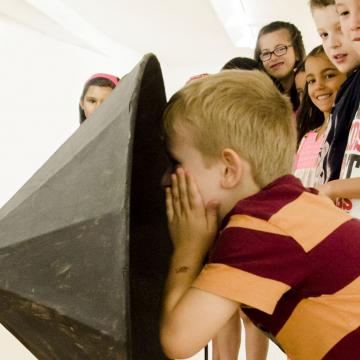
These workshops will give youngsters a chance to make direct contact with professionals from different fields of culture and art, while at the same time, promoting the active knowledge of some of the typical creative processes of our time.
Activities
The CGAC's Activities and Pedagogical Department develops its programme with a primary goal: to bring art to society through the rigorous analysis of critical issues inherent in contemporary artistic activity.
Film seasons and conferences, workshops, seminars and concerts, make up the centre’s fundamental offer of activities, aiming to involve a wide range of audiences from the professional sector of the world of art and culture to an increasingly larger group of artists and fine art and history students, not to mention all those interested in the evolution of art and aesthetic reflection.
At the same time, the CGAC develops specific programmes for schools and colleges as well as guided tours, with the purpose of providing the various groups who come to the museum with the necessary tools to understand contemporary art and, from there, the world we live in.
If you would like to receive information on CGAC activities, you can request it by sending a message to the following email addresses:
8 July 2015 - 29 July 2015
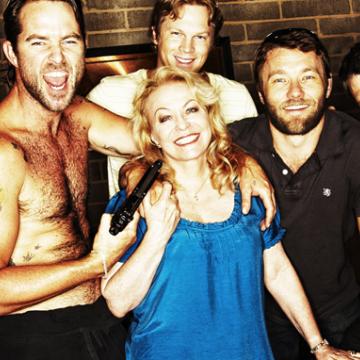
Every Wednesday and Thursday during the month of July—in collaboration with the Centro de Linguas Modernas (Modern Language Centre) at the University of Santiago de Compostela (USC), the Australian Embassy, and ASBA (Australia Spain Business Association)—the CGAC will screen seven films under the stars from filmmakers Stephan Elliott, Bruce Beresford, David Michôd, Peter Weir, Ray Lawrence, Ted Kotcheff e Simon Wincer.
24 March 2015 - 30 June 2015
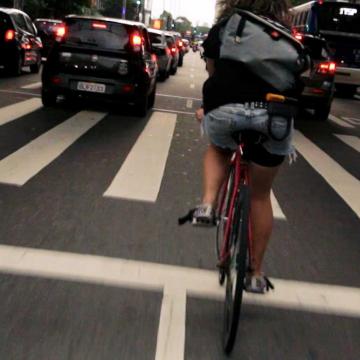
El Documental del Mes is an initiative run by Parallel 40 and was born as a CinemaNet Europe’s project in 2004.
5 May 2015 - 22 June 2015
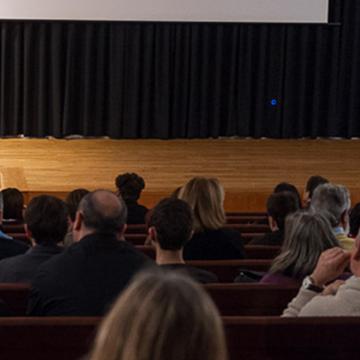
“While it is happening. Present-day drifts” aims to provide answers to the places and ideas of creation by hosting a series of conferences on different views of the world of contemporary art: What are today's new labels? How does contemporary art stand up to criticism? Why do we still try to set new trends? What are the new challenges that museums and galleries are faced with? How is the present seen and written about?
7 March 2015 - 20 June 2015
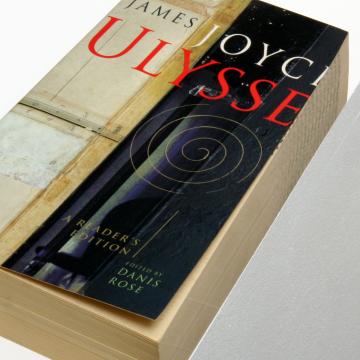
Worlds change, and in doing so they can sweep away the languages and cultures that the inhabitants of those worlds fail to adapt to the new situation. The causes of this crisis are usually diverse and the explanations may blame the foreign enemy or also seek society’s share of responsibility and that of the institutions it provides to govern itself. Languages and cultures should always seek their place in a context that is in constant…
9 June 2015 - 18 June 2015
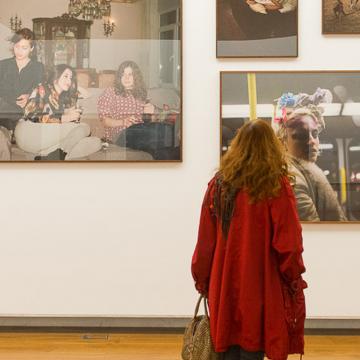
In the middle of spring, new dates are added to the Programme of guided visits led by professionals in the field of culture and the arts.

3 June 2015 - 4 June 2015
Saxophonist, composer and professor, Jorrit Dijkstra will teach a two-day master class focussing on collective improvisation in ensemble situations. The activity will revolve around a series of exercises on improvisation techniques in which participants will learn to play in a group, strengthening communication. They will be able to create music forms right on the spot based on a simple melody or song or even from scratch.

18 May 2015 - 24 May 2015
To mark International Museum Day on 18th May, the CGAC is scheduling activities of various disciplines throughout the whole week, starting off on Monday with an open day.

23 May 2015
The series Música y arte: correspondencias sonoras (Music and art: sonorous correspondences), which has become a reference point in the world of contemporary music creation, boasts the participation of composers from all over the world and the presentation of forty exclusive premiere works over the course of the six sessions to be held at the Centro Galego de Arte Contemporánea.