This course will allow us to approach in a practical way the tools that enable us to plan and design a message, to compose and shape it, to express an idea and to communicate with the environment in a visual way.
Activities
The CGAC's Activities and Pedagogical Department develops its programme with a primary goal: to bring art to society through the rigorous analysis of critical issues inherent in contemporary artistic activity.
Film seasons and conferences, workshops, seminars and concerts, make up the centre’s fundamental offer of activities, aiming to involve a wide range of audiences from the professional sector of the world of art and culture to an increasingly larger group of artists and fine art and history students, not to mention all those interested in the evolution of art and aesthetic reflection.
At the same time, the CGAC develops specific programmes for schools and colleges as well as guided tours, with the purpose of providing the various groups who come to the museum with the necessary tools to understand contemporary art and, from there, the world we live in.
If you would like to receive information on CGAC activities, you can request it by sending a message to the following email addresses:

16 February 2024 - 23 November 2024
ON-LINE FORMAT: Friday 16th February from 6.00 to 8.30 p.m. and Saturday 17th February from 10.00 a.m. to 2.30 p.m.
FACE-TO-FACE FORMAT: Saturdays from 10.00 a.m. to 2.15 p.m. and from 4.00 to 7.30 p.m

14 November 2024 - 22 November 2024
Thurdays and Fridays from 6.30 p.m. to 8.30 p.m.
In an exercise more attuned to archaeology, our aim during the course On the Origin of Species. The Other Genealogies of Contemporary Art is to unearth images and objects of popular culture made eternal through art, despite being destined for rapid consumption only to disappear after a single (and often final) use.

24 September 2024 - 26 September 2024
24 January 2024 - 29 May 2024
Wednesdays from 7.00 to 8.30 p.m.
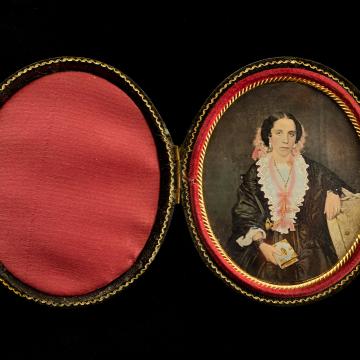
This course will be a stroll through the history of photography from the first desire to create an image by the action of light to the emergence of the avant-garde in the early twentieth century.

16 April 2024 - 28 May 2024
Tuesdays from 7.00 to 8.30 p.m.
Contemporary culture encompasses a broad spectrum of obsessions, interwoven under the power of image in the media.

20 February 2024 - 12 March 2024
Tuesdays 7.00 to 8.30 p.m.
At the beginning of the 20th century, with the avant-garde movements, the frontiers between fashion and art begin to blur as haute couture and design start to work with the same techniques and approaches used in artistic practices.

3 October 2023 - 19 December 2023
Tuesdays, 7 p.m. to 8.30 p.m.
‘Part of a door or window where the hinge pin passes through, and where it moves and rotates.’ This is the definition of quicio according to the revered Royal Spanish Academy. If after reading this you are asking yourself what on earth a hinge pin is, well that makes two of us: you, the reader, and me, this impersonal narrator (with the aspirations of a film voiceover) who is covertly trying to attract your attention.

4 February 2023 - 25 November 2023
ONLINE: Friday, 5 May from 6 p.m. to 8.30 p.m. and Saturday, 6 May from 10 a.m. to 2.30 p.m.
ON-SITE: Saturdays from 10 a.m. to 2.15 p.m. and 4 p.m. to 7.30 p.m.
ON-SITE: Saturdays from 10 a.m. to 2.15 p.m. and 4 p.m. to 7.30 p.m.
Drawing, painting and collage form part of the daily activities of an art classroom at any stage of education, but creating 3D projects is less commonplace. For this reason, in 2023, the art education course Art in the Classroom will focus on three-dimensional creations.

17 January 2023 - 6 June 2023
Tuesdays 7.00 p.m. - 9.00 p.m.
The consequences of the Second World War led many of the artists who had played a leading role in the European avant-garde movements to go into exile in the United States. New York became the great international artistic hub, replacing the role that Paris had played.